
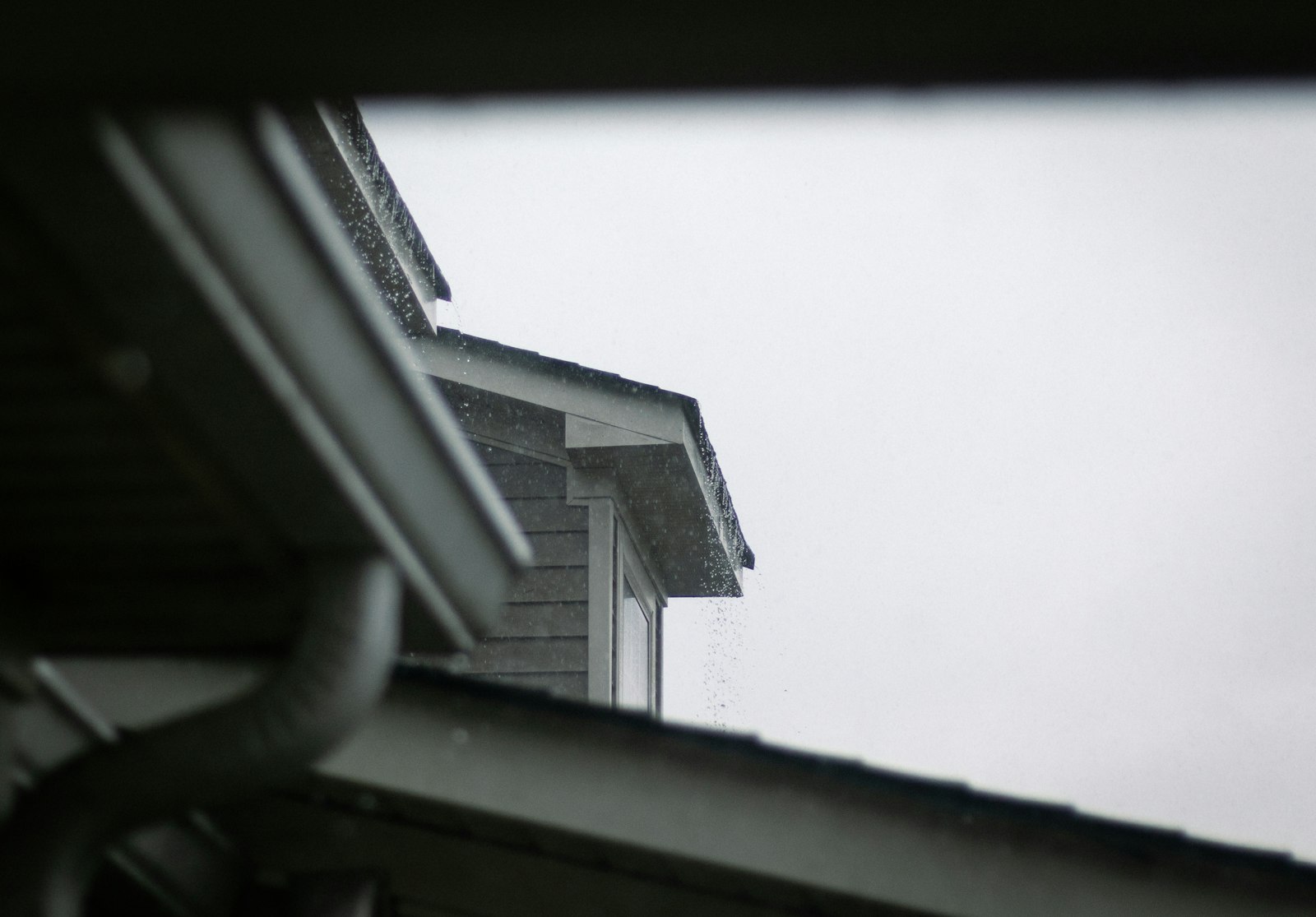
Every week someone in Greater Cincinnati asks us the same question. The gutters are leaking, or sagging, or overflowing in a storm, and the homeowner wants to know if this is a fix or a full tear-off. It is a fair question, and the honest answer is that it depends on what is actually failing. Here is how we think about it after 34 years of hanging gutters in this town.
When a repair is the right call
Gutters are a system of simple parts, and simple parts fail in simple ways. A single drip at a seam usually means the sealant has dried out, which is a service call, not a project. A gutter pulling away from the house at one spot is usually a failed hanger or a spike that has worked loose, and modern hidden hangers fix that properly. A downspout that detaches or crushes is a part swap.
If your gutters are under roughly 15 years old and the problem lives in one place, fix the one place. Anyone who quotes you a full replacement for a single bad seam is selling, not diagnosing. We would rather do the small job right and be the crew you call in ten years when the big one comes.
When replacement is the honest answer
The signs stack up. You rarely see just one of these on a system that is ready to go:
Sagging along whole runs, not one spot. When the back edge of a gutter has been wet and dry a few hundred times, the metal loses its shape and no hanger will bring it back.
Seams separating in more than one place. Old sectional gutters live and die by their seams. When two fail, the rest are the same age and the same condition. You can chase them one at a time for years, or fix the cause once.
Rust streaks, paint peeling on the fascia, or tiger striping down the gutter face. That is water going over or behind the gutter instead of through it, and it has usually been happening for a while before anyone notices.
Pooling water or washed-out mulch below the roofline. The system is not moving water to the downspouts anymore. In our Cincinnati service area, that water ends up against the foundation, and foundations are the most expensive thing in this whole conversation.
The age question
Aluminum gutters in southwest Ohio have a working life of about 20 years, sometimes more with clean gutters and a little luck with the trees. Once a system passes that age and starts failing in more than one spot, repairs become a subscription. You are not paying to fix the gutter, you are paying to postpone the decision. We tell homeowners plainly when that is the situation, because a patch we know will not hold is not a service, it is a delay.
Replacement also buys you something a patch never can: today’s seamless gutters are custom cut on site to the exact length of each run, which means no seams in the middle of a run at all. The most common failure point on old gutters simply does not exist on the new system.
Check the wood before you hang anything
Here is the part of the estimate that separates a real gutter crew from a guy with a ladder. Gutters attach to the fascia board, and the fascia is exactly where a failing gutter has been dumping water. If the wood is soft, new gutters will hold about as well as a shelf screwed into drywall.
We check the fascia and soffit on every replacement estimate, and when there is rot, we say so and show you. Sometimes it is one board. Occasionally it is a bigger repair. Either way you want to know before the new gutters go up, not after they start pulling loose.
The middle case: guards and rehangs
There is a third path between patch and tear-off that deserves a mention. If your gutters are structurally sound but you are up a ladder cleaning them four times a fall, gutter guards change the economics of keeping them. A sound system plus guards often beats replacement for houses under heavy tree cover, and we will say so when that is the math. Likewise, a full rehang, new hidden hangers along every run with the pitch reset, can buy honest years for a mid-life system that sagged from failed spikes rather than failed metal. Neither is the right answer everywhere, but a contractor who never mentions them is showing you the menu with half the pages torn out.
What we would do at your house
Walk the perimeter after the next hard rain. Look for overshooting water, drips at seams, sag you can see from the ground, and staining on the fascia. One problem in one place, call it a repair. Problems in three places on a system old enough to vote, start pricing replacement, because that is where the math lands anyway.
If you want a second set of eyes, that is what the free estimate is for. We will tell you which one it is, even when the answer is the smaller ticket. That is how a family business lasts 34 years in the same town.